

01 —– The Story
Why I started making my own condiments
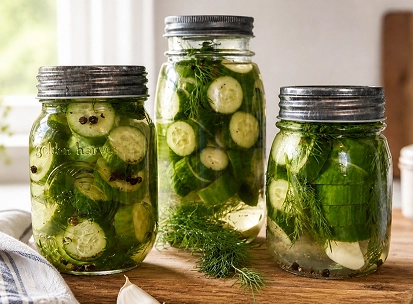
Three years later, my pantry looks different. The shelf that used to hold a row of identical glass bottles — ketchup, mustard, hot sauce, two kinds of salad dressing — is now a row of smaller jars, each one labeled in my own handwriting. Some are pretty. Some have leaked. The sriracha I tried to make in 2024 turned a color I can only describe as “concerning.” But the lessons, oddly, are not about the condiments.
I learned that most condiments are pantry projects in disguise. Mayonnaise is oil and egg and acid, whipped. Hot sauce is fermented peppers and salt. Ketchup is tomatoes and vinegar and sugar, reduced. Once you see the pattern, the grocery aisle becomes less of a default and more of a choice.
I learned that a mortar and pestle is the most honest tool in the kitchen. A blender does the job faster, but a mortar asks you to listen — to the crush of the seeds, to the smell that lifts as the oils release. The work is short. The attention is the whole point.
And I learned that a small batch is almost always enough. A half-pint jar of celery salt lasts a month. By the time it’s running out, the season has changed, and you want something different anyway.
02 —– The Lessons
What I learned in three years
Three years later, my pantry looks different. The shelf that used to hold a row of identical glass bottles — ketchup, mustard, hot sauce, two kinds of salad dressing — is now a row of smaller jars, each one labeled in my own handwriting. Some are pretty. Some have leaked. The sriracha I tried to make in 2024 turned a color I can only describe as “concerning.” But the lessons, oddly, are not about the condiments.
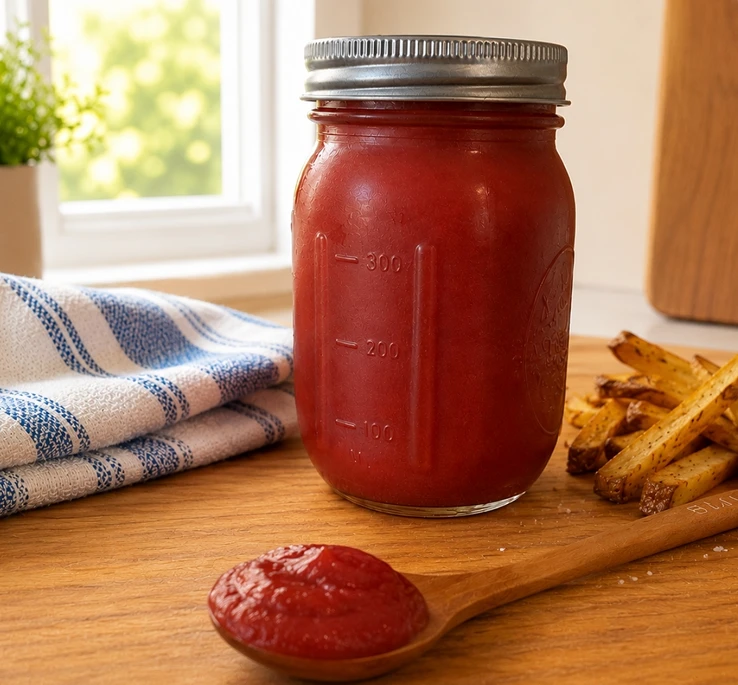
I learned that most condiments are pantry projects in disguise. Mayonnaise is oil and egg and acid, whipped. Hot sauce is fermented peppers and salt. Ketchup is tomatoes and vinegar and sugar, reduced. Once you see the pattern, the grocery aisle becomes less of a default and more of a choice.
I learned that a mortar and pestle is the most honest tool in the kitchen. A blender does the job faster, but a mortar asks you to listen — to the crush of the seeds, to the smell that lifts as the oils release. The work is short. The attention is the whole point.
And I learned that a small batch is almost always enough. A half-pint jar of celery salt lasts a month. By the time it’s running out, the season has changed, and you want something different anyway.
The pantry list, if you’re starting:
- Whole celery seed, freshly ground — the difference between store-bought and homemade is enormous. Buy a small bag; it lasts a year.
- Yellow and brown mustard seed — soak overnight in vinegar or water before grinding, or the flavor stays flat.
- A clean half-pint glass jar with a tight lid. Not a repurposed pasta-sauce jar; the seal matters.
- A small mortar and pestle, or a coffee grinder dedicated to spices — never both, never shared with coffee.
- Coarse sea salt, never iodized — iodine tastes like a chemistry set, and it lingers.
The first time I tasted celery salt I’d ground myself, the room smelled like a kitchen I hadn’t lived in yet — bright, green, almost lemony, with the warmth of celery underneath. I keep a jar of it next to the stove now, and I reach for it the way I used to reach for black pepper.
~ from the kitchen, August 2026
03 —– The Beginning
How to begin
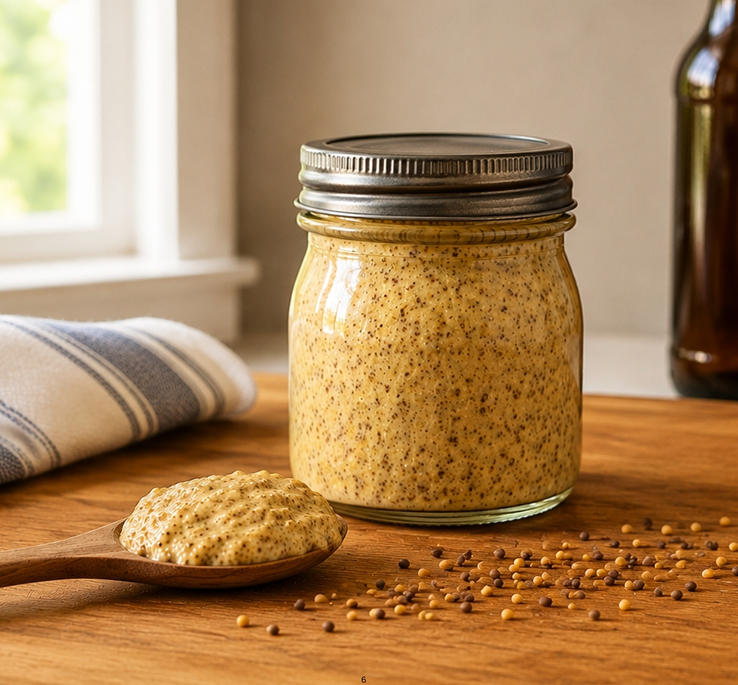
If you want to start, pick one condiment. Not three. Pick the one you use the most, the one you’re always running out of, the one that costs more than it should at the store. For me it was mustard. For you it might be hot sauce, or salad dressing, or vanilla extract.
Make it once. Don’t worry about whether it’s perfect — worry about whether you liked making it. The second batch is always better than the first, and the third batch is when you start changing things on purpose. A little more vinegar. A little less salt. A pinch of something you wouldn’t have thought of the first time.
The shelf fills in slowly. Three years from now you’ll look up and realize you haven’t bought a bottle of anything in months, and that the kitchen has become, in some small quiet way, more yours than it was before.
That’s the whole secret. Not a recipe. Just a habit, and a jar, and the time it takes to notice what you’re making.